

6 Symptoms of Dog Heatstroke to Watch For

When temperatures rise, so does your dog’s risk of overheating, and dog heatstroke symptoms can escalate from mild to life-threatening in a matter of minutes. The six symptoms of dog heatstroke to watch for are excessive panting and drooling, bright red or pale gums, lethargy and weakness, vomiting or diarrhea, confusion or disorientation, and rapid heart rate with labored breathing. Any one of these signs means your dog needs immediate attention and knowing how to spot them before a situation becomes critical could save your dog’s life. Read on for a detailed breakdown of each symptom, which dogs are most at risk, and exactly when to contact your veterinarian from Dyer Animal Clinic.
What Is Heatstroke in Dogs?
Unlike humans, dogs don’t sweat through their skin. They rely almost entirely on panting to release heat. When the environment is too hot, too humid, or physical activity is too intense, panting can’t keep up and the dog’s core temperature climbs dangerously high.
Canine heatstroke (also called heat exhaustion in its earlier stages) is a medical emergency. Normal body temperature for a dog is between 101°F and 102.5°F. When it climbs above 104°F, the dog is in serious danger. At 106°F or higher, organ damage and death can occur rapidly.
Which Dogs Are Most at Risk?
While any dog can suffer from heatstroke, some are more vulnerable than others. Our veterinary team at Dyer Animal Clinic sees higher risk in:
- Brachycephalic (flat-faced) breeds like Bulldogs, Pugs, and Boston Terriers
- Overweight or obese dogs
- Senior dogs and puppies under six months
- Dogs with thick or double coats
- Dogs with underlying heart or respiratory conditions
- Dogs that are not acclimated to outdoor heat
6 Dog Heatstroke Symptoms to Recognize Immediately
Knowing the signs of heatstroke in dogs can mean the difference between a full recovery and a fatal outcome. Here are the six most critical symptoms to watch for.
Excessive Panting and Drooling
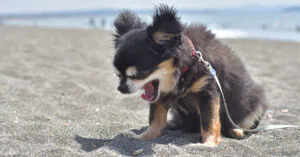
The earliest and most noticeable dog heatstroke symptom is intense, rapid panting that doesn’t slow down, even when the dog is resting in the shade. You may also notice thick, ropy drool or excessive salivation. This is your dog’s body working overdrive to cool itself, and it’s a clear sign something is wrong.
Bright Red or Pale Gums
Healthy gum color in dogs is a bubblegum pink. During heatstroke, gums may turn bright red (indicating overheating and increased blood flow) or pale and white (a sign of shock and poor circulation). Either is a veterinary emergency. Checking your dog’s gum color is one of the fastest ways to assess their condition.
Lethargy and Weakness
A dog experiencing overheating may suddenly become unresponsive, wobbly, or struggle to stand. This isn’t just tiredness from a long walk. It’s a sign that the body is beginning to shut down due to heat stress. If your dog collapses or can’t hold their own weight, treat this as an emergency.
Vomiting or Diarrhea
Gastrointestinal distress is a lesser-known but important symptom of dog heatstroke. Vomiting, sometimes with blood, and diarrhea can occur as the body diverts resources away from digestion to cool itself. If your dog vomits during or after time in the heat, don’t dismiss it as an upset stomach. It may be a sign of heat exhaustion that requires prompt veterinary attention.
Confusion or Disorientation
Heat affects the brain quickly. Signs of neurological impact include stumbling, seeming “drunk,” staring blankly, or failing to respond to their name or familiar commands. Seizures can also occur in severe cases. If your dog appears confused or disoriented after being in the heat, this is a critical dog heatstroke symptom that demands immediate veterinary care.
Rapid Heart Rate and Labored Breathing
As the body struggles to compensate for overheating, the heart beats faster and breathing becomes strained and noisy. You may notice the chest heaving with effort. In dogs with flat faces such as Frenchies or Shih Tzus, labored breathing during heat can escalate into respiratory failure. Any significant change in your dog’s breathing rate or heart rate in hot conditions warrants a call to Dyer Animal Clinic right away.
Is My Dog Overheating or Just Hot?
Pet owners often wonder:”Is my dog overheating or just warm from exercise?” The difference matters. A dog that’s simply warm after a walk will pant, seek shade, and settle down within a few minutes of rest and water. A dog in heat distress will continue to pant intensely, won’t settle, and will show one or more of the symptoms listed above.
When in doubt, err on the side of caution. Dog heatstroke symptoms can worsen rapidly, and waiting too long to seek help can be fatal.
Common Situations That Lead to Dog Heatstroke
Understanding what puts dogs at risk is just as important as recognizing the symptoms of heatstroke in dogs. The most dangerous scenarios include:
- Being left in a parked car, even for a few minutes, even with windows cracked
- Exercise during peak heat hours (10 a.m.–4 p.m.) in summer
- Being left outside without shade or access to water
- Playing vigorously in high humidity, even on moderately warm days
- Being kept in a poorly ventilated space, such as a garage or sunroom
When to Take Your Dog to the Emergency Vet
If your dog is showing signs of heatstroke, especially confusion, collapse, vomiting, or labored breathing, do not wait to see if things improve on their own. Call Dyer Animal Clinic or head to the nearest emergency animal hospital immediately.
At our clinic, your veterinarian will assess your dog’s core temperature, provide IV fluids to combat dehydration and shock, and monitor for complications like kidney failure, blood clotting issues, and brain damage, all of which can occur even in dogs who initially appear to recover.
The Best Protection Against Dog Heatstroke Is Prevention
Once you know the dog heatstroke symptoms to watch for, prevention becomes your most powerful tool. Keep walks to the cooler parts of the day, always provide fresh water, never leave your dog in a vehicle, and pay close attention on especially humid summer days, even if the temperature seems manageable.
If you have concerns about your dog’s heat tolerance or want to discuss what to do in a heat emergency, our team at Dyer Animal Clinic in Dyer, Indiana is here to help. Give us a call at (219) 865-3737 today. We’re always happy to answer your questions and help keep your pet safe all summer long.
Share This Post
Recent Posts



About Dyer Animal Clinic
We are a place where pets and their people can feel at home. It's a place where wellness is maintained and supported from the time they’re newborns through their golden years.